Adams Rite eForce Keypad Lock Installation on a Charleston Storefront Door by Charleston Locksmith
Keys get copied, lost and handed to people who no longer work for you. For a lot of Charleston businesses, that is the moment a keypad lock starts to make sense. On a recent commercial call, our team at Charleston Locksmith installed an Adams Rite eForce keypad lever trim, by ASSA ABLOY, on an aluminum storefront door. The photos in this post are from that job, so you can see exactly what the finished install looks like and how it works.
What We Installed
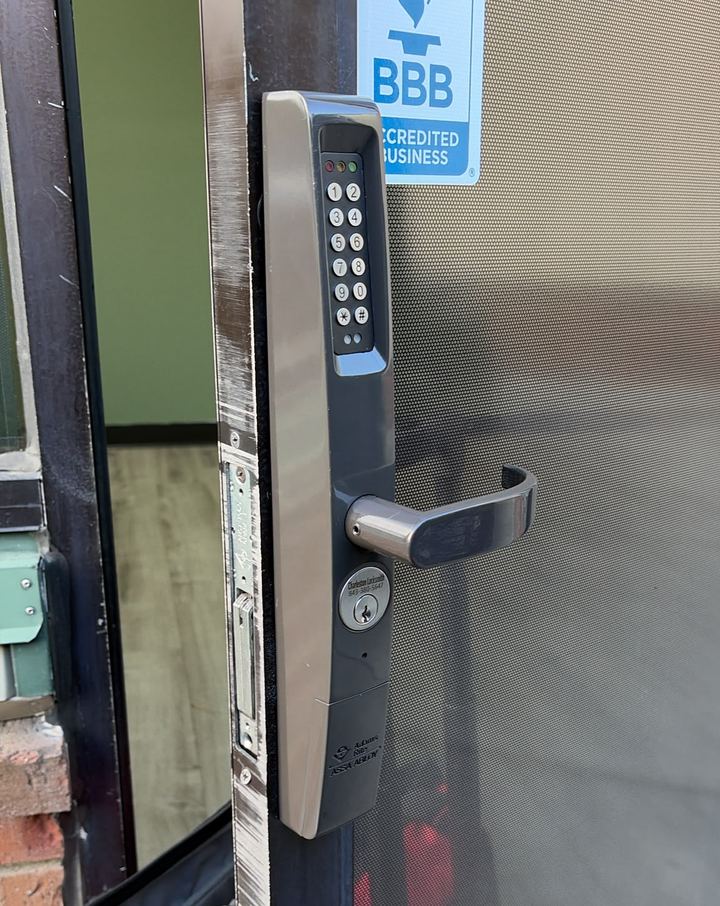
This door is a typical commercial storefront: a glass and aluminum door with a narrow frame, or stile, on the lock side. The hardware we installed includes:
- Keypad lever trim on the outside, so staff enter a code instead of carrying a key.
- A lever handle instead of a knob, which is easier to use with full hands or limited grip.
- A key override cylinder as a mechanical backup if a code is forgotten or the keypad needs service.
- Hardware made for narrow stiles, sized for the limited space inside an aluminum storefront frame.
Adams Rite eForce Keypad: Key Specs
According to Adams Rite, the eForce keypad trim is designed for narrow-stile aluminum doors and offers:
- Full outdoor rating from -31°F to 151°F
- Up to 150 users, including master and supervisor codes
- Key override with a standard mortise cylinder
- Battery power from 4 AA alkaline batteries
- Compatibility with Adams Rite deadlocks, deadlatches and exit devices
Why Businesses Switch to Keypad Entry
- No more key copies to track. When an employee leaves, you change a code instead of rekeying the door or hoping every key came back.
- Easy access for the right people. Opening staff, cleaners and trusted vendors can get in without a meeting at the door.
- Easier on hands. The ADA guidance for operable parts calls for hardware usable with one hand, without tight grasping, pinching or twisting of the wrist. Lever handles meet that idea; round knobs do not.
- A backup when you need it. With a key override, a dead battery or a forgotten code does not lock you out of your own business.
Want more than a keypad? See our access control door systems and commercial door security services.
The Challenge With Storefront Doors
Aluminum storefront doors look simple, but they are one of the trickier doors to put a keypad on. The stile is narrow and hollow, so there is very little room for a lock body, and the hardware has to be made for that shape. Residential keypad deadbolts and standard commercial levers usually will not fit. If the wrong hardware is forced in, you can end up with a latch that does not line up with the strike, a stile that is cut too far, or a lock that binds every time the door closes.
That is why the first part of any storefront job is an inspection, not a drill. Before we recommend hardware, we look at:
- The stile width, door thickness and the lock that is already in the door
- The door’s handing (which way it swings) and how it hangs on its hinges or pivots
- The strike in the frame and how the latch lines up with it
- The door closer, because a closer that slams or a door that sags puts extra strain on any latch
How the Finished Lock Works
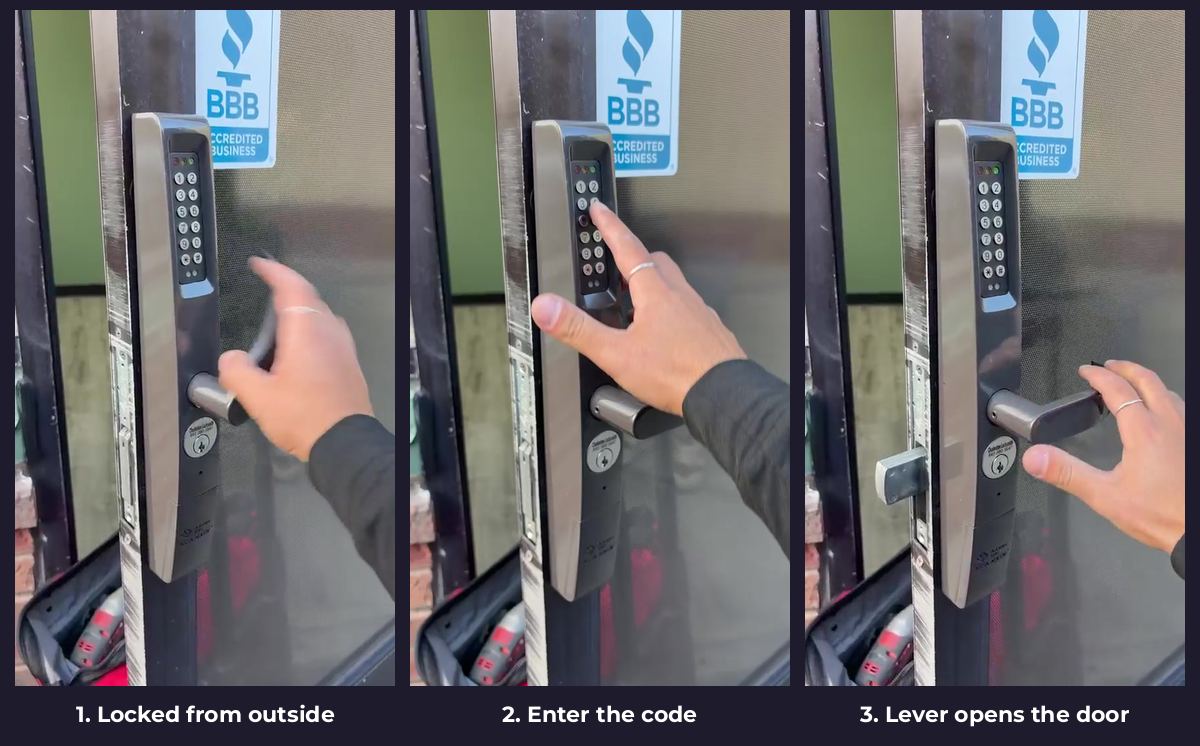
Here is the test we ran on this job:
- Locked: the outside lever will not open the door.
- Enter the code on the keypad.
- Unlocked: the lever turns and the latch pulls back.
What to Check Before You Sign Off on Any Keypad Install
Whether we do the work or someone else does, these are the checks worth running before the installer leaves:
- With the lock armed, try the outside lever. It should not open the door.
- Enter a valid code. The lever should release and the latch should pull back smoothly.
- Let the door close on its own. The latch should catch the strike without slamming or sticking.
- Test the key override on the outside cylinder.
- From the inside, confirm the door opens the way your exit needs to open. Building and fire codes generally require exit doors to open from the inside without a key, code or special knowledge.
- Ask how to change codes and replace the batteries, and write the instructions down.
Managing Access Codes Safely
- Use separate codes for each person, so you can remove one person without changing everyone’s code.
- Change codes when someone leaves, the same day if possible.
- Skip easy guesses like 1234, the street number or the year the business opened.
- Wipe the keypad now and then. Worn or smudged buttons can hint at which numbers are in the code.
- Keep the master or programming code with the owner or manager only.
- Keep the override key somewhere secure and off the main key ring.
Keeping a Keypad Lock Working
- Watch for the low battery signal and replace the batteries right away instead of waiting.
- Keep the keypad clean and dry. Use the cleaning method in the manufacturer’s instructions.
- Have the door closer adjusted if the door slams or does not latch. Many lock problems are really door problems.
- Call a locksmith if the lever feels loose, the latch sticks or the keypad stops responding.
Signs Your Storefront Lock Needs an Upgrade
- You are not sure how many keys are out there or who has them.
- Former employees or contractors had keys.
- The latch sticks, the cylinder is worn or the door has to be lifted to lock.
- Someone has tried to force the door.
Frequently Asked Questions
Can a keypad lock go on my existing aluminum storefront door?
Often, yes, but it depends on the stile width, door thickness and the lock already in the door. Storefront doors need hardware made for narrow stiles, so we inspect the door before recommending a lock.
Will I still be able to use a key?
Many commercial keypad trims, including the Adams Rite eForce in this post, accept a key cylinder for override access. It is your backup if the keypad ever needs service.
Can I change the codes myself?
Usually, yes. The eForce is programmed from the keypad. We walk you through programming when we install the lock.
Is a keypad lock more secure than a key lock?
It solves a different problem. A keypad does not stop someone from forcing a weak door, but it does stop the spread of copied keys and lets you remove access the moment someone should not have it.
About the Author
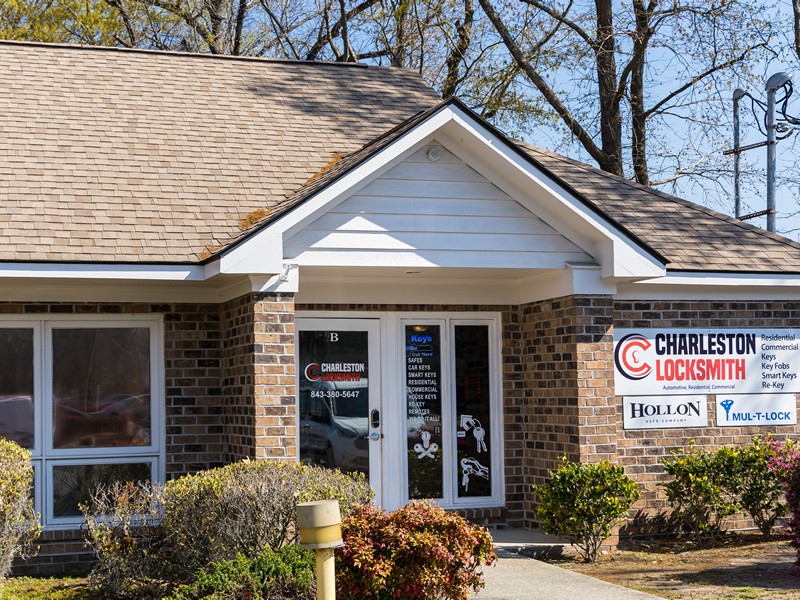
Adam Kadosh is the owner of Charleston Locksmith, a locksmith shop at 1730 Savannah Hwy Suite B in Charleston, SC. His team installs and services commercial locks, access control hardware and car keys for businesses and drivers across Charleston and the surrounding areas. The photos in this article are from a real Charleston Locksmith job. See more of our commercial locksmith work.
Need Keypad Access for Your Business?
Call Charleston Locksmith at (843) 380-5647 or visit us at 1730 Savannah Hwy Suite B, Charleston, SC 29407. We will look at your door and recommend hardware that fits it. Serving Charleston and surrounding areas.
Sources: Adams Rite, eForce 3090-150 Keyless Entry; U.S. Access Board, Guide to the ADA Standards, Chapter 3: Operable Parts.