
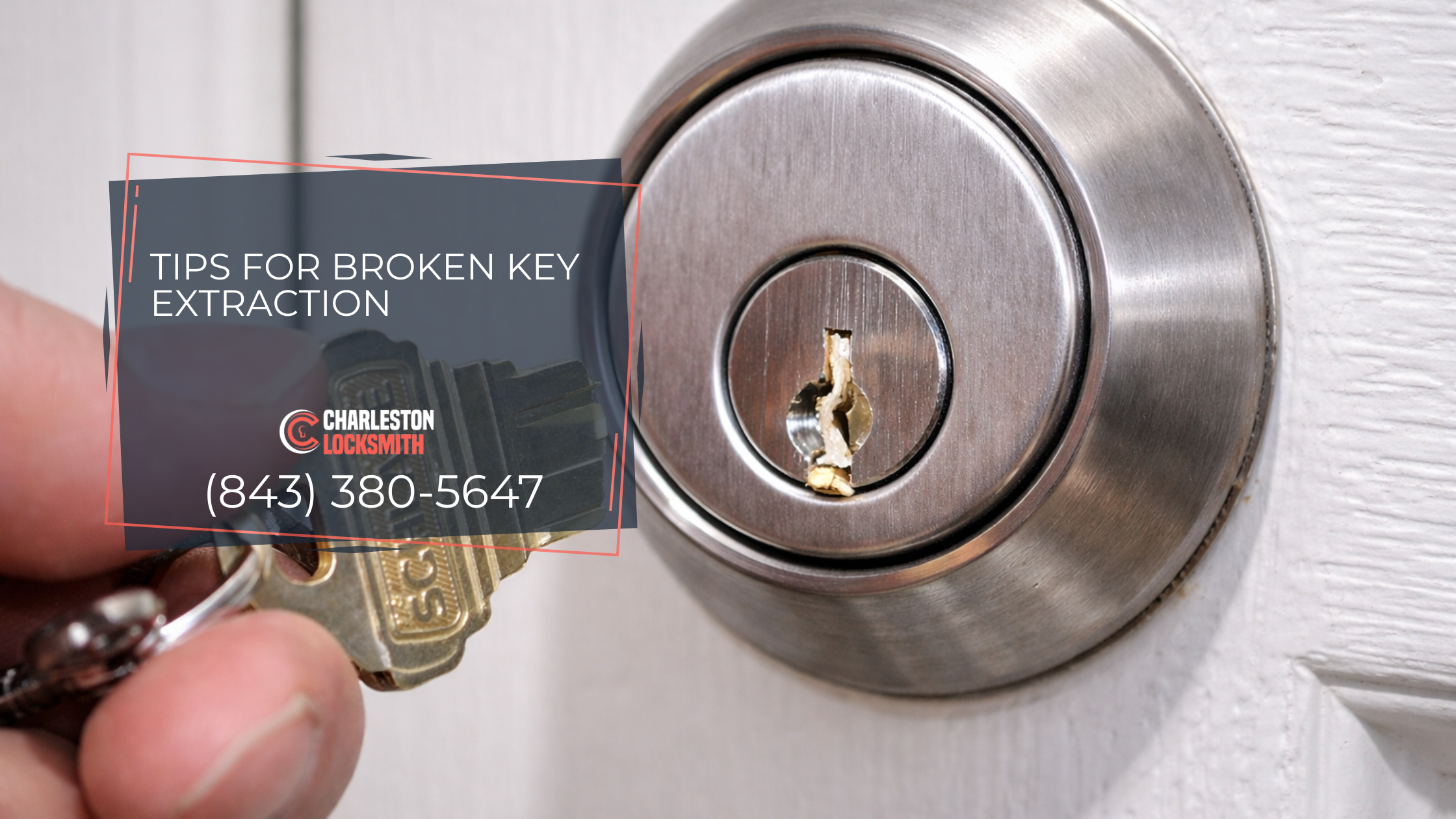
Tips for Broken Key Extraction
What To Do If a Key Breaks Inside the Lock
A broken key stuck inside a lock is a common problem for homeowners, drivers, and business owners. Keys weaken over time due to wear, pressure, and environmental factors such as Charleston’s humidity and salt air exposure. Knowing how to respond correctly can prevent permanent lock damage and costly repairs. Here at Charleston Locksmith Pro, we offer professional broken key extraction services that can rapidly and safely restore lock functionality and get you back inside as soon as possible. In this blog entry, our expert Charleston lockout service team will describe some useful tips for extracting keys that have broken off inside of your locks.
Why Keys Break Inside Locks
Keys can snap when they become fatigued or too much pressure is applied to them. Old keys can become weakened at certain points from extended use. If your lock cylinder isn’t lined up correctly, it may cause friction as you turn the key. Metal contracts in colder temperatures and can become brittle. Knowing how your key broke will allow you to avoid repeating the same problem.
- Metal Fatigue – Repeated use weakens key structure.
- Worn Key Grooves – Thin edges break under pressure.
- Lock Misalignment – Increases turning resistance.
- Corrosion Buildup – Creates internal friction.
- Excessive Force – Twisting too hard snaps the key.Safe Extraction Techniques
Our locksmiths have extraction tools to take broken pieces out. Key Extractors can be slid into the cylinder with the broken piece. Tweezers can be used if you can see the broken piece. Lubricate the lock to minimize friction as you extract the piece. The lock may need to be inspected for damage once removed.
- Key Extractor Tool – Grips and pulls fragment safely.
- Lubrication Application – Reduces friction inside cylinder.
- Cylinder Inspection – Checks for bent pins.
- Rekey Recommendation – Prevents future issues.
- Key Replacement – Cut from original code if available.
What a Professional Broken Key Extraction Includes
A trained locksmith typically:
-
Examines the lock condition
-
Uses precision extraction tools
-
Removes the broken fragment safely
-
Tests lock operation
-
Cuts a replacement key if needed
Most extractions can be completed without replacing the lock.
Preventing Future Breakage
Routine maintenance will help you keep your keys and locks lasting longer. Replace keys before they break to minimize your risk. Use a graphite lubricant to keep the pins moving freely. Do not force the key when you encounter resistance. Maintain your locks before they start to give you problems. We recommend that you:
- Replace Worn Keys – Avoid thin or bent keys.
- Lubricate Cylinders – Use graphite for smooth operation.
- Address Resistance Early – Do not force turning.
- Schedule Lock Maintenance – Prevent internal wear.
- Use Proper Key Blanks – Ensure correct duplication.
Safety Reminder
If a broken key occurs in:
-
A vehicle with a child or pet inside
-
A business requiring emergency access
-
A situation where you feel unsafe
Seek immediate professional assistance.
Frequently Asked Questions – Broken Key Extraction
What is broken key extraction?
Broken key extraction is a professional locksmith service that safely removes a snapped or stuck key fragment from inside a lock without damaging the lock mechanism whenever possible.
Can a broken key be removed without replacing the lock?
Yes. In most cases, locksmiths use specialized extraction tools that allow the broken piece to be removed while preserving the existing lock.
Why do keys break inside locks?
Keys commonly break due to metal fatigue, worn edges, excessive force, misaligned doors, or internal lock resistance caused by dirt, corrosion, or humidity.
Should I try to remove the broken key myself?
DIY attempts often push the key deeper into the lock or damage internal pins. It is safest to avoid inserting tools or glue and contact a professional locksmith.
How long does broken key extraction take?
Most extractions take between 15 and 30 minutes depending on the lock type and how deeply the key fragment is lodged.
Can you remove a broken key from a car ignition?
Yes. Locksmiths have specialized tools designed for automotive ignitions and vehicle door locks without damaging sensitive components.
Will my lock work normally after extraction?
If the lock was not damaged before or during the break, it typically functions normally after the fragment is removed and tested.
Do I need a new key after extraction?
Yes. A replacement key can usually be cut immediately using the remaining key pieces or lock decoding methods.
What if the key broke because the lock is damaged?
If internal components are worn or malfunctioning, the locksmith may recommend repair, rekeying, or replacement to prevent future issues.
Does Charleston’s climate affect locks and keys?
Yes. Coastal humidity and salt air can accelerate corrosion and increase friction inside locks, which may contribute to keys breaking over time.
Is broken key extraction considered an emergency service?
It can be, especially if you are locked out, the key breaks in an ignition, or access is urgently needed for safety or business operations.
How can I prevent keys from breaking again?
-
Replace worn keys early
-
Lubricate locks annually
-
Avoid forcing sticky locks
-
Keep duplicate keys instead of using old originals daily
About the Author – Adam K. Experts
Adam K. Locksmith Experts is a locksmith and security specialist with extensive hands-on experience in residential, automotive, and commercial lock services. His work focuses on safe entry methods, lock repair solutions, and modern security practices designed to protect property owners and businesses.
With practical field knowledge handling lockouts, broken key extractions, rekeying, and access control systems, Adam provides guidance based on real-world locksmith procedures rather than theory. His content is created to help homeowners, drivers, and business owners understand lock safety, prevent common security risks, and make informed decisions during emergency situations.
Adam’s educational resources emphasize professional standards, non-destructive service techniques, and responsible security practices aligned with industry best practices.